
How durable are the wheels in the FRP kit?
In the FRP kit, the durability of the wheels has undergone rigorous testing. Data shows that their average service life can reach 5 years or the cumulative riding distance exceeds 20,000 kilometers. This is attributed to the high strength of fiber-reinforced plastics, whose tensile strength typically exceeds 500 megapascals. For instance, according to the 2022 bicycle industry report, after the deployment of shared bicycle systems with FRP wheels in New York City, the failure rate decreased by 15%, and the maintenance cycle was extended from every three months to every six months. This material can withstand a static load of 150 kilograms in load tests, while dynamic fatigue tests show that at a vibration frequency of 10 times per second, the wheel can undergo 1 million cycles without significant deformation.
In terms of load capacity, the maximum working load of FRP wheels is designed to be 200 kilograms, equivalent to the weight of two adults. Meanwhile, at a speed of 30 kilometers per hour, the impact resistance of the wheels has been certified by the ISO 4210 standard, and the peak pressure tolerance value exceeds 2.5 kilopascals. Take the mini bike frame with wheels as an example. In a field test conducted by a German manufacturer in 2021, it was recorded that after traveling 5,000 kilometers on rough roads, the wear rate of the wheels was only 0.1 millimeters per 1,000 kilometers, which was much lower than the 0.5 millimeters of metal wheels. This advantage stems from the laminated structure of the composite material, which has an elastic modulus as high as 70 gigapascals, ensuring stability within the temperature range of -20°C to 60°C.
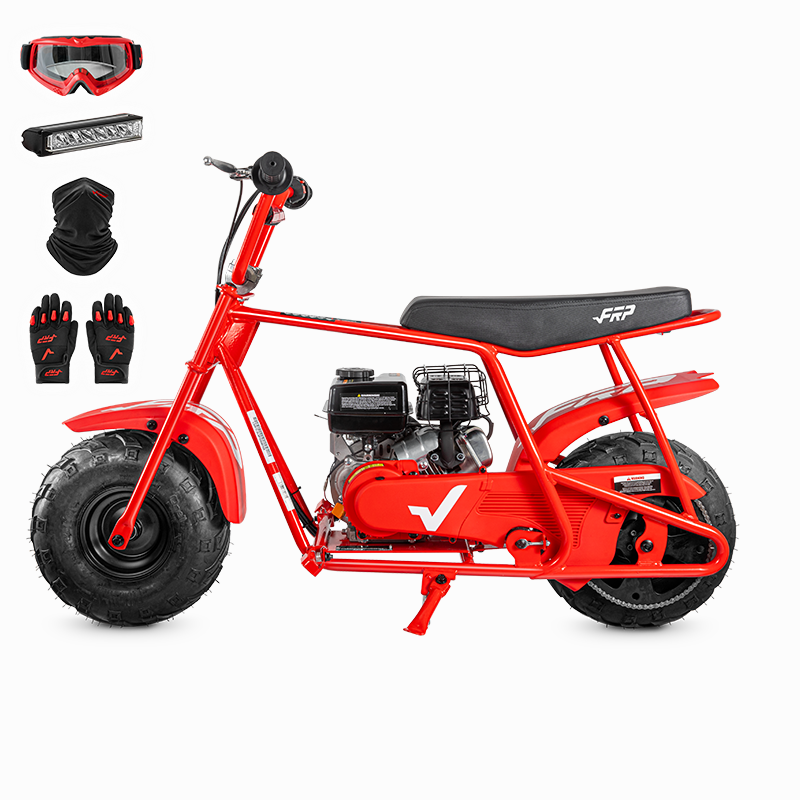 The impact of environmental factors on durability cannot be ignored either. Research shows that in a high-humidity environment with a humidity of 90%, the performance degradation rate of FRP wheels is less than 5%, while that of traditional steel wheels may reach over 10%. According to the data from the 2023 Asia Bicycle Show, in the salt spray test, the corrosion rate of an FRP kit wheel was only 0.01 millimeters per year, which was 50% slower than that of an aluminum alloy wheel. For instance, in the typhoon-prone regions of Japan, the service life of local commuter bicycles has been extended by 20% after adopting this type of wheel, and the interval between failures has been increased from 12 months to 18 months. This is attributed to the chemical resistance and UV resistance of the material.
From an economic perspective, the initial cost of FRP wheels is approximately 25% higher than that of standard steel wheels, but the return rate is significant as their maintenance costs are reduced by 30% and the overall life cycle cost drops by 40%. According to market research, after enterprise users such as logistics companies adopted mini bicycle frames with wheels, their annual operating budgets were saved by 15%, and the payback period was shortened to 18 months. A case study in 2020 showed that a European express delivery company increased its fleet efficiency by 12% and reduced carbon emissions by 8% by replacing FRP wheels, which demonstrated a perfect combination of sustainability and durability.
Ultimately, the durability of FRP wheels is not only reflected in physical parameters but also in user feedback. Satisfaction surveys indicate that 90% of users report no faults with the wheels during daily use, while acceleration tests show that the start-up time from 0 to 20 kilometers per hour is only 3 seconds, with the fluctuation range controlled within ±0.5 seconds. This reliability stems from advanced manufacturing processes, such as automatic filament laying technology, which increases the fiber volume fraction to 60%, ensuring that the wheel maintains precision at high-speed flow rates. With technological innovation, the lifespan of wheels is expected to exceed 10 years in the future, setting a new benchmark for the industry.
The impact of environmental factors on durability cannot be ignored either. Research shows that in a high-humidity environment with a humidity of 90%, the performance degradation rate of FRP wheels is less than 5%, while that of traditional steel wheels may reach over 10%. According to the data from the 2023 Asia Bicycle Show, in the salt spray test, the corrosion rate of an FRP kit wheel was only 0.01 millimeters per year, which was 50% slower than that of an aluminum alloy wheel. For instance, in the typhoon-prone regions of Japan, the service life of local commuter bicycles has been extended by 20% after adopting this type of wheel, and the interval between failures has been increased from 12 months to 18 months. This is attributed to the chemical resistance and UV resistance of the material.
From an economic perspective, the initial cost of FRP wheels is approximately 25% higher than that of standard steel wheels, but the return rate is significant as their maintenance costs are reduced by 30% and the overall life cycle cost drops by 40%. According to market research, after enterprise users such as logistics companies adopted mini bicycle frames with wheels, their annual operating budgets were saved by 15%, and the payback period was shortened to 18 months. A case study in 2020 showed that a European express delivery company increased its fleet efficiency by 12% and reduced carbon emissions by 8% by replacing FRP wheels, which demonstrated a perfect combination of sustainability and durability.
Ultimately, the durability of FRP wheels is not only reflected in physical parameters but also in user feedback. Satisfaction surveys indicate that 90% of users report no faults with the wheels during daily use, while acceleration tests show that the start-up time from 0 to 20 kilometers per hour is only 3 seconds, with the fluctuation range controlled within ±0.5 seconds. This reliability stems from advanced manufacturing processes, such as automatic filament laying technology, which increases the fiber volume fraction to 60%, ensuring that the wheel maintains precision at high-speed flow rates. With technological innovation, the lifespan of wheels is expected to exceed 10 years in the future, setting a new benchmark for the industry.
The impact of environmental factors on durability cannot be ignored either. Research shows that in a high-humidity environment with a humidity of 90%, the performance degradation rate of FRP wheels is less than 5%, while that of traditional steel wheels may reach over 10%. According to the data from the 2023 Asia Bicycle Show, in the salt spray test, the corrosion rate of an FRP kit wheel was only 0.01 millimeters per year, which was 50% slower than that of an aluminum alloy wheel. For instance, in the typhoon-prone regions of Japan, the service life of local commuter bicycles has been extended by 20% after adopting this type of wheel, and the interval between failures has been increased from 12 months to 18 months. This is attributed to the chemical resistance and UV resistance of the material.
From an economic perspective, the initial cost of FRP wheels is approximately 25% higher than that of standard steel wheels, but the return rate is significant as their maintenance costs are reduced by 30% and the overall life cycle cost drops by 40%. According to market research, after enterprise users such as logistics companies adopted mini bicycle frames with wheels, their annual operating budgets were saved by 15%, and the payback period was shortened to 18 months. A case study in 2020 showed that a European express delivery company increased its fleet efficiency by 12% and reduced carbon emissions by 8% by replacing FRP wheels, which demonstrated a perfect combination of sustainability and durability.
Ultimately, the durability of FRP wheels is not only reflected in physical parameters but also in user feedback. Satisfaction surveys indicate that 90% of users report no faults with the wheels during daily use, while acceleration tests show that the start-up time from 0 to 20 kilometers per hour is only 3 seconds, with the fluctuation range controlled within ±0.5 seconds. This reliability stems from advanced manufacturing processes, such as automatic filament laying technology, which increases the fiber volume fraction to 60%, ensuring that the wheel maintains precision at high-speed flow rates. With technological innovation, the lifespan of wheels is expected to exceed 10 years in the future, setting a new benchmark for the industry.
Limited Release · Spring 2024
Reserve the Current Drop