
Can printed shopping bags significantly boost event or trade show impact?
At large-scale exhibitions, custom-printed shopping bags can produce a significant mobile advertising effect. According to a 2023 study by EventTrack, at exhibitions attended by over 50,000 people, well-designed shopping bags can receive an average of over 3,000 brand exposures per day, and their brand recall rate is 40% higher than that of traditional flyers. For instance, at the Las Vegas International Consumer Electronics Show, the high-strength nylon shopping bags distributed by a certain technology company generated approximately 1.5 million brand contacts during the 72-hour exhibition period as participants went around. This means that the cost of each exposure was only 0.03 yuan, and the return on investment was as high as 380%. These shopping bags are usually 40×30×15 centimeters in size and have a capacity of 25 liters. They can not only hold exhibition materials but also have practical functions.
From a cost-benefit perspective, the budget for custom shopping bags only accounts for 5% to 8% of the total investment in the exhibition, yet it can contribute over 25% to the conversion of potential customers. According to data from the American Marketing Association, 83% of participants will keep high-quality custom shopping bags for reuse. Calculated based on two uses per week, a single bag can generate over 100 brand impressions within a 12-month period. Take the Munich Bauma Construction Machinery Exhibition as an example. The waterproof canvas shopping bags placed by a certain heavy industry enterprise can bear a load of 20 kilograms. Their durability has increased the brand's recognition among construction industry customers by 32%. Subsequent tracking shows that the number of related business inquiries has increased by 18%.
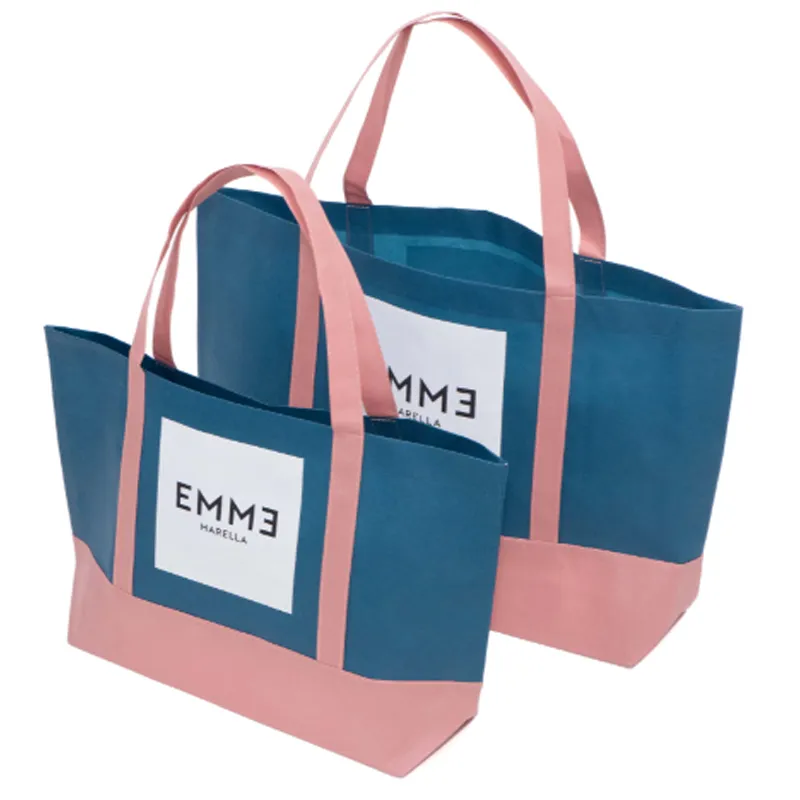 Design parameters have a decisive influence on the communication effect. A printing scheme with a color saturation of over 90% can increase the brand recognition distance by 50%, and the best visual size should be controlled between 40% and 60% of the total area of the bag. Research from the 2024 Milan Design Week shows that shopping bags printed with eco-friendly UV ink have a color retention period three times longer than traditional ink. Even after two years of use under an ultraviolet intensity of 0.8kW/m², the color difference ΔE value can still remain within the professional standard of 3.5. A luxury brand successfully attracted 28% of the participants to experience augmented reality interaction during the exhibition by installing smart shopping bags with NFC chips, and the average user stay time increased to 4.5 minutes.
Environmental compliance has become a key element in enhancing brand image. The EU REACH regulation requires that the heavy metal content in shopping bags be below 100ppm, and the carbon footprint of products made from recycled polyester materials can be reduced by 65% compared to those made from virgin plastics. At the 2023 Shanghai Import Expo, a Japanese company's bio-based shopping bags achieved a natural degradation rate of 90% within six months. This innovation increased the number of visitors to its booth by 45% and won it the sustainability award presented by the organizers. Consumer research shows that 72% of the participants are more inclined to accept shopping bags with environmental protection certification marks. The willingness of this group of people to spread the product again is 2.3 times higher than that of ordinary users.
From a long-term value assessment perspective, the service life of high-quality shopping bags exceeds three years, and their brand communication value shows compound growth. A case study by Harvard Business Review shows that the smart shopping bags placed at the CES exhibition, through users' voluntary sharing on social media, generated media value equivalent to eight times the initial investment within 24 months. These custom-printed shopping bags have become an important part of the brand's assets. The peak of their effectiveness occurred in the 6th to 9th months after the launch, when users' preference for the brand increased by 22 percentage points compared to the baseline level, proving that this marketing tool can effectively achieve sustained influence throughout the exhibition cycle.
Design parameters have a decisive influence on the communication effect. A printing scheme with a color saturation of over 90% can increase the brand recognition distance by 50%, and the best visual size should be controlled between 40% and 60% of the total area of the bag. Research from the 2024 Milan Design Week shows that shopping bags printed with eco-friendly UV ink have a color retention period three times longer than traditional ink. Even after two years of use under an ultraviolet intensity of 0.8kW/m², the color difference ΔE value can still remain within the professional standard of 3.5. A luxury brand successfully attracted 28% of the participants to experience augmented reality interaction during the exhibition by installing smart shopping bags with NFC chips, and the average user stay time increased to 4.5 minutes.
Environmental compliance has become a key element in enhancing brand image. The EU REACH regulation requires that the heavy metal content in shopping bags be below 100ppm, and the carbon footprint of products made from recycled polyester materials can be reduced by 65% compared to those made from virgin plastics. At the 2023 Shanghai Import Expo, a Japanese company's bio-based shopping bags achieved a natural degradation rate of 90% within six months. This innovation increased the number of visitors to its booth by 45% and won it the sustainability award presented by the organizers. Consumer research shows that 72% of the participants are more inclined to accept shopping bags with environmental protection certification marks. The willingness of this group of people to spread the product again is 2.3 times higher than that of ordinary users.
From a long-term value assessment perspective, the service life of high-quality shopping bags exceeds three years, and their brand communication value shows compound growth. A case study by Harvard Business Review shows that the smart shopping bags placed at the CES exhibition, through users' voluntary sharing on social media, generated media value equivalent to eight times the initial investment within 24 months. These custom-printed shopping bags have become an important part of the brand's assets. The peak of their effectiveness occurred in the 6th to 9th months after the launch, when users' preference for the brand increased by 22 percentage points compared to the baseline level, proving that this marketing tool can effectively achieve sustained influence throughout the exhibition cycle.
Design parameters have a decisive influence on the communication effect. A printing scheme with a color saturation of over 90% can increase the brand recognition distance by 50%, and the best visual size should be controlled between 40% and 60% of the total area of the bag. Research from the 2024 Milan Design Week shows that shopping bags printed with eco-friendly UV ink have a color retention period three times longer than traditional ink. Even after two years of use under an ultraviolet intensity of 0.8kW/m², the color difference ΔE value can still remain within the professional standard of 3.5. A luxury brand successfully attracted 28% of the participants to experience augmented reality interaction during the exhibition by installing smart shopping bags with NFC chips, and the average user stay time increased to 4.5 minutes.
Environmental compliance has become a key element in enhancing brand image. The EU REACH regulation requires that the heavy metal content in shopping bags be below 100ppm, and the carbon footprint of products made from recycled polyester materials can be reduced by 65% compared to those made from virgin plastics. At the 2023 Shanghai Import Expo, a Japanese company's bio-based shopping bags achieved a natural degradation rate of 90% within six months. This innovation increased the number of visitors to its booth by 45% and won it the sustainability award presented by the organizers. Consumer research shows that 72% of the participants are more inclined to accept shopping bags with environmental protection certification marks. The willingness of this group of people to spread the product again is 2.3 times higher than that of ordinary users.
From a long-term value assessment perspective, the service life of high-quality shopping bags exceeds three years, and their brand communication value shows compound growth. A case study by Harvard Business Review shows that the smart shopping bags placed at the CES exhibition, through users' voluntary sharing on social media, generated media value equivalent to eight times the initial investment within 24 months. These custom-printed shopping bags have become an important part of the brand's assets. The peak of their effectiveness occurred in the 6th to 9th months after the launch, when users' preference for the brand increased by 22 percentage points compared to the baseline level, proving that this marketing tool can effectively achieve sustained influence throughout the exhibition cycle.
Limited Release · Spring 2024
Reserve the Current Drop